Friday, December 8, 2017

fashion photography

1:
makeup
hair style
neck lengthened
eyes enlarged
face slightly thinned
2:
makeup
hair syle
tan
larger eyes
brighter lips
thinner torso
longer legs
highlights
smaller abdomen
3:
impossible- too many
but the model was pizza that was canged into a woman
4: yes, because the model on an ad ahs look appealing to the consumer.
5: yes, here's why: https://www.huffingtonpost.com/entry/what-the-ideal-womans-body-looks-like-in-18-countries_us_55ccd2a6e4b064d5910ac3b0
6: removing small imperfections is fine, but thinning out and lengthening of the body isn't.
7: fashion photography is taking pictures of typically female models for selling/promoting a certain product.
8: there are too many types of photography to list them here, but each has about the same relation to reality- the photos are supposed to be as real as possible. But fashion photograhy is mean to promote a certain product, therefore the object in the picture could be slightly edited.
9: To show us the power of photoshop (the answer you want)... To waste my free time beind a computer (my answer)
10: because real men don't need photoshop!

magazine preview

tips:
1. the image should be appealing
2. it should be interesting
3. should be easy to scan
4. should be worth investing time and money
5. should arouse curiosity

covers:
1. formal
2. formal
3. informal
4. environmental
5. formal
6. formal
7. formal
8. formal
9. formal
10. formal
11. formal
12. formal
13. formal
14. formal
15. formal
16. environmental
17. formal

favorite:
#15
"For Vanity Fair's October Issue-to honor the magazine's birth 100 years ago, in 1913-sexy was the word as we resurrected a Monroe pose and introduced a new logo (smart, slim, serif!). Not to be outdone by the magazine's stately new font, model Kate Upton channeled screen icon Marilyn Monroe as she pouted and posed with a congratulatory birthday cake for photographer Annie Leibovitz. Happy Birthday, indeed."

Happy Birthday idea was communicated through Kate Upton holding the birthday cake.

part 4:
image based magazine covers inlcude a photograph as the main point. Almost always the picture corresponds with the topic of the magazine. Typically the object in the picture will be looking at the camera and smiling. But image based magazine covers can also have an image of a landscape and a meal, in that case, the object can't look at the camera, nor smile at it.

illustration based magazine covers have a drawing as the main point instead of a picture. Some magazines go for computer generated illustrations. Illustration based magazine covers were used in mid 30's of the 20th century, for the lack of photos. Now they're used to represent something funny, typically.

type based magazine covers have just text as the main point insted of a picture or an illustration. These type of covers are rare, but whatever text they contain, it is shocking and striking. Type based magazine photograohs have gained popularity in the past few years. They're interesting to read.


concept based magazine covers can be a mixture of the three types listed above to present a strong message in a certain way. The key to a good concept based magazine cover is that the cover has to be uickly and easily understood. It is also rare, but has popularity in business, weekly news, and independent magazines.

the relationship between photos and words on the magazine cover has to be very connected, because the consumer wants to look at the picture and be able to tell what the magazine is about. 

Thursday, November 16, 2017

portraits

1. Play with Eye Contact

It is amazing how much the direction of your subject’s eyes can impact an image. Most portraits have the subject looking down the lens – something that can create a real sense of connection between a subject and those viewing the image. But there are a couple of other things to try:
A. Looking off camera – have your subject focus their attention on something unseen and outside the field of view of your camera. This can create a feeling of candidness and also create a little intrigue and interest as the viewer of the shot wonders what they are looking at. This intrigue is particularly drawn about when the subject is showing some kind of emotion (ie ‘what’s making them laugh?’ or ‘what is making them look surprised?’). Just be aware that when you have a subject looking out of frame that you can also draw the eye of the viewer of the shot to the edge of the image also – taking them away from the point of interest in your shot – the subject.
B. Looking within the frame – alternatively you could have your subject looking at something (or someone) within the frame. A child looking at a ball, a woman looking at her new baby, a man looking hungrily at a big plate of pasta…. When you give your subject something to look at that is inside the frame you create a second point of interest and a relationship between it and your primary subject. It also helps create ‘story’ within the image.

2. Change the Format Framing

Many photographers get stuck in a rut of only ever shooting either in ‘landscape’ (when the camera is held horizontally) or ‘portrait’ (when the camera is held vertically) modes. Look back through your images and see which one you use predominantly.
Just because a vertical framing is called ‘portrait’ mode doesn’t mean you always need to use it when shooting portraits. Mix your framing up in each shoot that you do and you’ll add variety to the type of shots you take.
3. Engaging Your Subject
The first order of business is to engage your subject. This is where we all have to learn to overcome our shyness and approach people in an open and friendly manner. Be up front about who you are and what you're doing. Don't just barge into a scene with your cameras blazing. In fact, it is usually best to leave your camera in its bag when you first approach people, so as not to frighten them. Take time to engage the person in conversation, just as you would if you didn't have a camera. Remember the Golden Rule. Think about how you'd feel if someone approached you and wanted to make a photograph. How they did it would determine how you would respond.


Environmental portraits:
Image result for environmental portraiti like this picture because of the interesting depth of field, and that's why i chose it.
Image result for environmental portraiti like this picture because this guy's workshop/garage looks awesome, and i chose it for the shadows around the frame.

self-portrait:
Related imagei like this picture because of the waterline match with the horizon, and that's why i  chose it.
Related imagei like this picture for the lines on the mirror, and i chose it because the lines form a pattern

casual portrait:
Image result for casual portrait photographyi like this picture because the the subject is very good looking, and i chose this picture because the subject isn't looking at the camera.
Related imagei like this picture because of the random yellowish spots of light, and that's why i chose it.


project:
I don't really get what I am supposed to do for the project, but if I have to take 2 different pictures of portraits and self-portraits, I will probably shoot my mom and my little sister either in our house or the greenbelt. For self-portraits, I will probably take a picture of myself in my small room, listening to music or reading. I am afraid that I won't be able to show you what makes me tick though, because my girlfriend just broke up with me. 

Thursday, November 9, 2017

5 websites:

https://petapixel.com/2014/12/31/10-photography-resolutions-new-year/

So the website is about taking photos. But it's not a tutorial on how to take photos, and it's not about video too. It's about 10 resolutions that you should put on your new year resolutions' list. They are just tips to make your photos better.

1) I learned that i should be giving less f***s about other people's opinions.
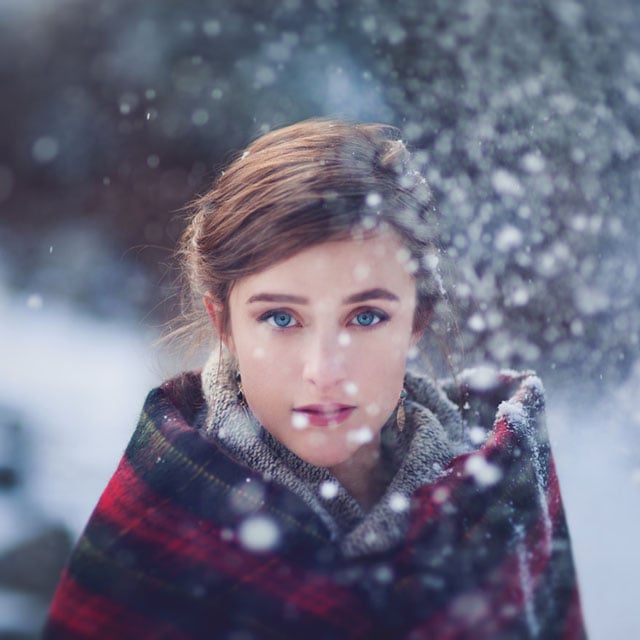
2)face
a) Because it has a cute girl and snow in it
b) Depth of field; complimentary colors
c)Jenna Martin
3)
a) On this website, I saw some very nice pictures. I also saw some good tips for photographers. There were also some Christmas themed photos. And ads, I saw ads.
b) As a photographer I should print more photos
c) It is literally about tips for photographers

https://petapixel.com/2014/12/19/disorienting-beauty-spiral-staircases-old-abandoned-buildings/

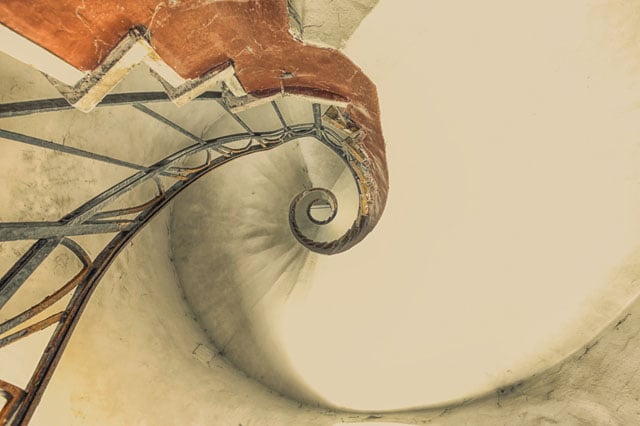
This website is about the photos of staircases. Staircases in old houses, to be exact. And those staircases are so disorienting you lose the felling of up and down. Also there are not many words in the article, there are just mainly pictures.

1) I learned that pictures of staircases can be rather disorienting.
2)ce03c92fb72410ed04eae174df0d4a3a
a) Because this is the most confusing one
b) analogous colors
c)Christian Richter
3)
a)In this website I saw some ads along the side. I also saw some not so satisfying photos of old staircases. But there were some staircases that didn't look so bad.
b) Staircase photos can be confusing.
c) I think that photos somewhat relate to photography, right?

https://blog.phowd.com/2014/09/7-tips-shooting-great-portrait-photographs/

This website is about tips for photography. It is also about helpful tip for photography. There are also different tips for photography. And finally, it's about tips... for photography.

1) I learned that you can break the rules of photography.
2)Portrait Photo (Main Image)
a)Because it's a rather nice photo
b)analogous colors
c)Yuri Arcurs
3)
a) In this website I saw the difference between photoshopped and original photos. I also saw some interesting tips. And I saw the 'You might also like' banner.
b) I don't have to follow the rules
c) This relates to photography because the tips are for photographers

http://www.rachelsussman.com/oltw/

This website has almost no text. It has photos of the oldest living things in the world. There are quite a few of those pictures here. All these things are 2,000 years old/er.
pando_4317_txt_800px.jpg
2)
a)I like birch trees
b)patterns
c)Rachel Sussman
3)
a) In this website I saw a few photos of old living things. I also saw a review by a random person. And there was a little paragraph of what the photographer had to say about all this.
b)Birch trees are over 2,000 years old
c)These are photos and relate to photography

https://petapixel.com/2017/11/08/pete-souza-looks-back-1-9-million-photos-obama/

This website is about all the photos taken of Obama. It is an interview transcript with Pete Souza. Also it advertises his book. And this is just a preview, I'm disappointed.

1) I have learned that Obama was on Edmund Pettus Bridge.
2)
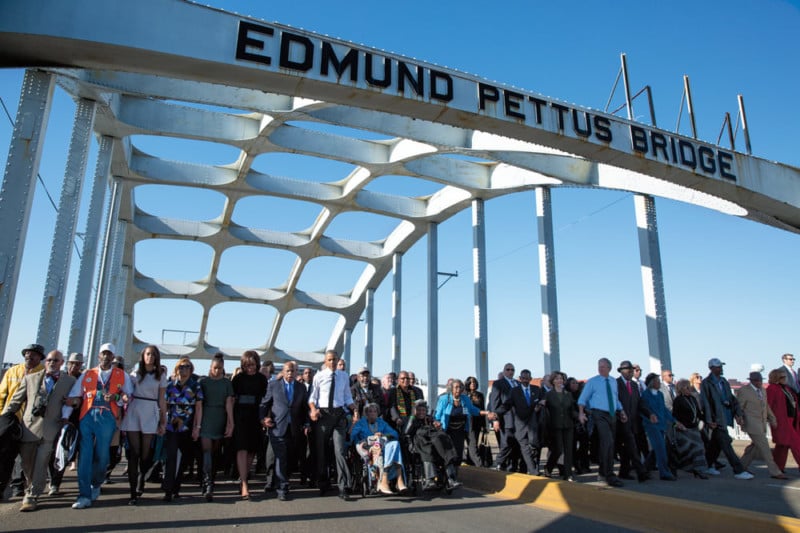
a)Try to find Obama in there
b)no rules
c) Pete Souza
3)
a) I saw a bunch of pictures of Obama. I also saw ads. And finally I saw that this was just one giant ad.
b)Obama was many places
c)photos are from photography

Friday, November 3, 2017

'merican soldier

A. What is the most powerful image from the pictures printed in the Denver Post over the three weeks they published images from the year of coverage? Why?

The one where he is sitting turned away from the screen and alone mending his elbow, because everyone else is sitting together, as a group, and he isn't

B. How do the images work together to tell a story?

They reveal Fisher's life in the army

C. How do the captions enhance the photographs?

They explain things that can't be understood from the image

D. Summarize the story of Ian Fisher, based just on the captions.

He went through a boot camp, lived on drugs and energy drinks, switched platoons, fought in Iraq, returned home, and married Kristen

E. For the photos in which Ian is the main subject of the photos, in what tense are the verbs usually written?

Past tense

F. Break down the captions:

1. How many sentences are they on average?
     3
2. Read the first sentence of a couple of them, what information do they provide? 
      What's happening in the photo
3. Read the second sentences of a couple of them, what information do they provide?
       What happened afterwards
4. If there is a third sentence, what information does it provide?
       A quote
5. Do any captions include a quote?
      Yes, a few do
6. Are there any that have four sentences?
      No
G. Why do you think it is possible to tell a complete story with just photos and captions?

Because you can tell what's happening in the photos and read more info in the captions

H. If you can create a story with just photos and captions, why bother writing a story at all?

Because the photos and captions don't stimulate our senses as much as words do.

title